The Cyber Power Mindset: Protection is Good, Preparation is Better
Why 'Fortress Building' fails and how to raise a child with internal filters instead.
When it comes to our children and their screens, most of us fall into one of two camps.
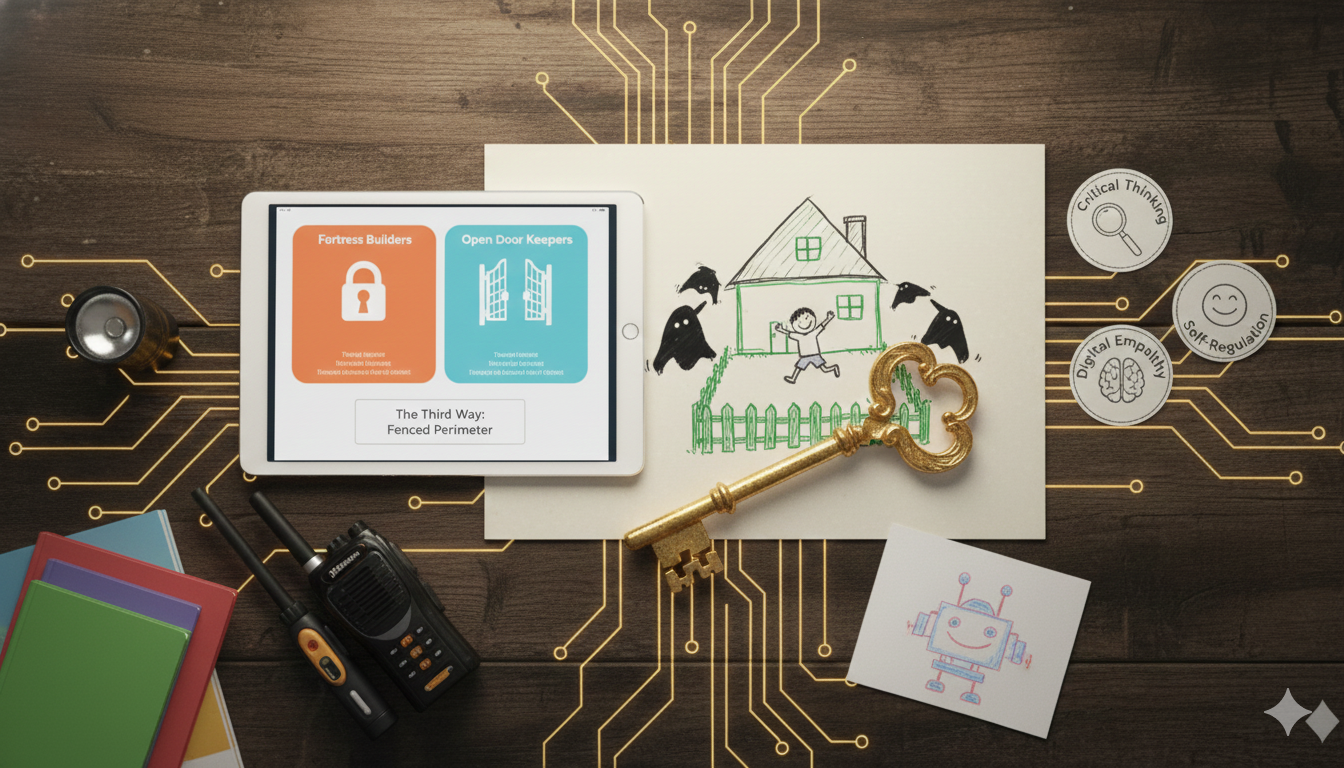
The Fortress Builders. We see the headlines about cyberbullying, predators, and addiction, and our hearts race. We want to lock it all down. We might use tracking apps, read every text message, and ban social media. We do this because we love them fiercely and want to keep them safe.
The Open Door Keepers. We see the benefits. We want them to learn, connect, and have fun. We might trust them to figure it out, or perhaps we just feel overwhelmed by the technology and hope for the best. We do this because we want them to be independent and happy.
In my view, both of these instincts are correct. The digital world is dangerous, so we need protection. The digital world is essential, so we need access.
But instead of choosing between a home that feels like a prison and the wild, there is a third way. Think of it like a fenced perimeter.
The AI-Native Generation
Today, that perimeter has to account for a new demographic shift: the "AI-native" generation. For our kids, technology isn't just a tool for searching; it's an active agent that talks back, creates, and makes decisions. This creates a "digital parenting gap". While we might be guarding the front door against academic cheating, our children are often using the back door of AI for emotional support, social anxiety, and identity formation—private interactions that leave no public footprint.
The "Cyber Power" approach is about creating awareness and a layered defense within the family's established perimeter.
Moving from "Policing" to "Preparing"
The tech industry sells us "Parental Controls"—filters, blockers, and timers. These are useful parts of the fence, especially when they are young.
External Control: I block a disruptive game or website so they can't see it.
Internal Control: My child sees an AI "hallucination" (a confident lie), feels a "check" in their gut, and checks a second source themselves.
Because AI interactions are often ephemeral and private, we cannot just be gatekeepers. We must move to "modeling." Our children learn how to navigate the digital world not by reading rules, but by watching how the parents query an algorithm, critique a newsfeed, or handle our own digital use.
What is a "Cyber Power Child"?
Throughout this series, we are going to equip the child with Cyber Power. This isn't a child who just follows rules. This is a child who has:
Critical Thinking: They don't just consume; they question. They ask, "Is this person who they say they are? Is this video true?". They understand that AI is not a "brain," but a "Super-Powered Pattern Matcher" that predicts the next word based on math, not truth.
Digital Empathy: They interact with integrity and understand that words on a screen have real impact. They maintain the distance needed to stay safe. They also recognize the "ELIZA effect"—the tendency to think a chatbot has feelings just because it’s programmed to sound like a friend.
Self-Regulation: They can feel when their brain is getting tired and know when to disconnect. They can feel when an algorithm is "hooking" them and know when to step away. They use a "Human-in-the-Loop" mindset, ensuring they are always the ones providing the intent and final verification for anything they create.
The Roadmap: The Algorithmic Hearth
I have created The Cyber Power Toolkit as our operational home base. We use gold standards, like the EU’s "Better Internet for Kids" (BIK+) and AI Literacy frameworks, and translate them into simple parenting steps.
- Part 2: The Manuals. How I read the "ingredients label" of an app and spot apps that might harvest data under the guise of education.
- Part 3: The Emotions. How I teach empathy in a world of AI companions that can't replace real human connection.
- Part 4: The Law. Understanding your family's digital rights and maintaining a perimeter around your personal data.
- Part 5: The Crisis. A calm guide for when things go wrong, from cyberbullying to AI-generated deepfakes.
- Part 6: The License. The checklist of skills kids need to navigate before they "fly solo".
Take a deep breath. We don’t have to be tech geniuses to do this. We just have to be their parents—modeling curiosity, critique, and resilience. Let’s get started.